
Cable trays and ladders, connections, related accessories and structures:
Application of cable tray and ladder:
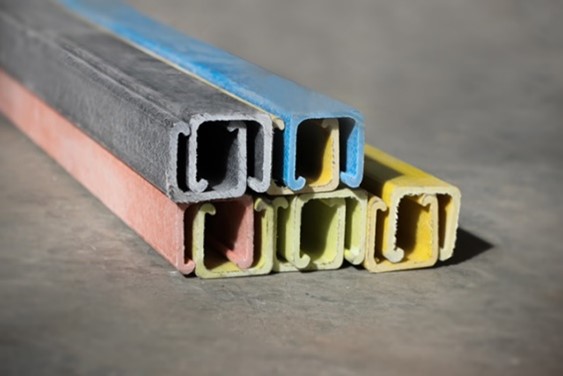
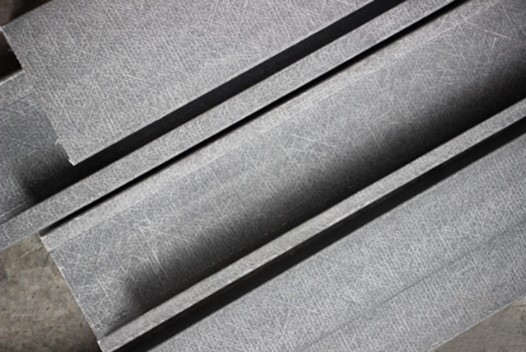
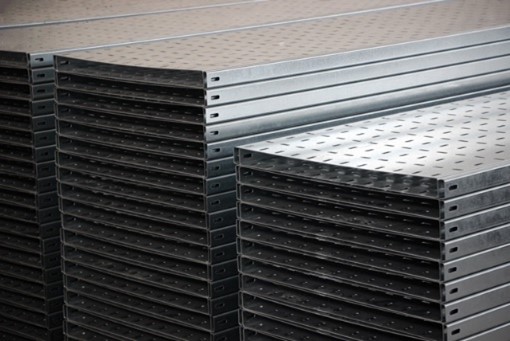
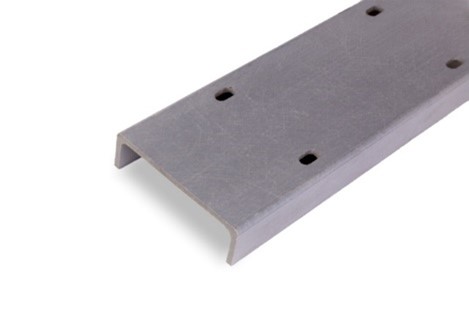
Cable trays and ladder are used for cabling in oil and gas sites, petrochemical plants, power plants, commercial and industrial buildings, factories, etc. Cable trays and ladders are made of different materials for different weather conditions. For cold and mountainous weather, the cable tray and ladder are usually made of galvanized sheet (galvanized fabric sheet), hot galvanized for humid and hot areas, stainless steel or GRP for acidic and humid areas. In recent years, GRP cable trays and ladders are used for acidic environments with high humidity because they are cheaper and have higher resistance than stainless steel.
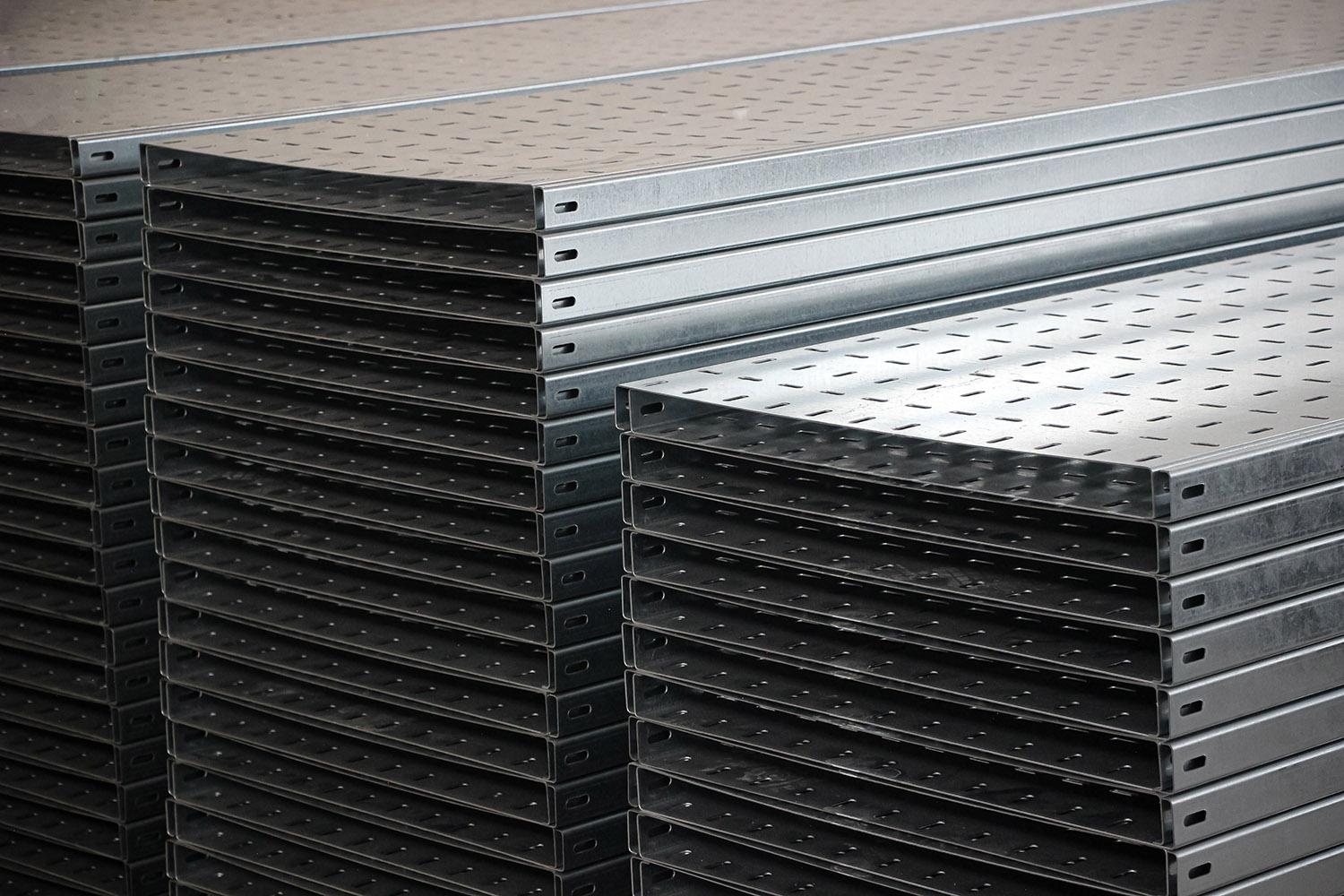
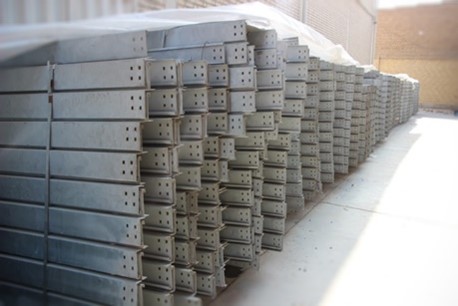
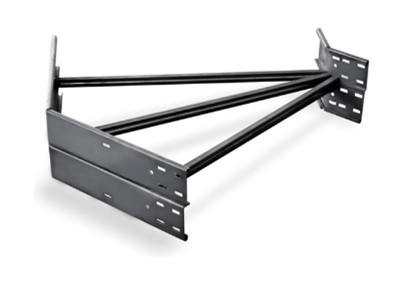
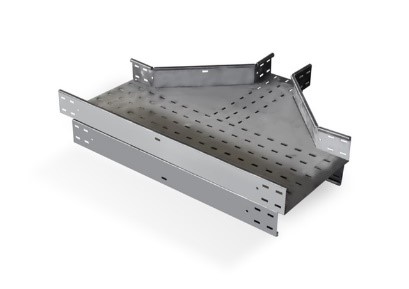
Cable tray technical specifications:
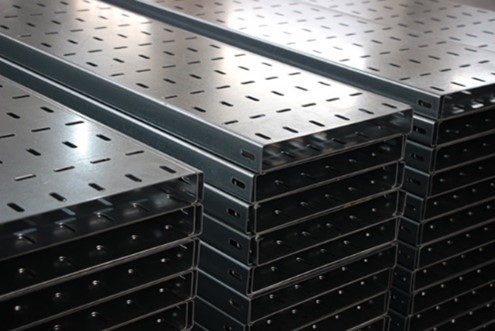
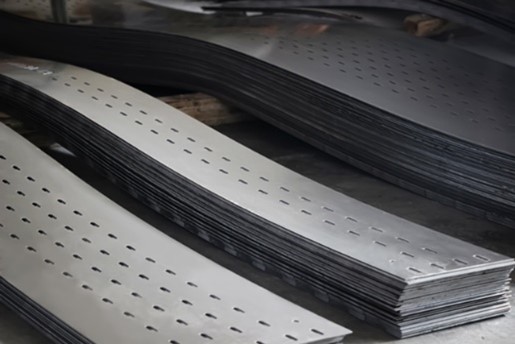
The production range of cable trays is from 50 mm to 600 mm wide. The height of the wall of the trays depends on the type and size and number of cables that are placed in it. For cable trays with a width of 50 to 100 mm, the wall height is considered to be less than 100 mm, and for cable trays with widths greater than 100 mm, the wall height is considered to be 100 mm. Of course, it is important that Britiston company is able to supply cable trays with other specifications according to the client’s needs. Cable trays are usually produced with punches. Punching is done so that the cable tray can be installed on the support, and at the same time, punching causes air circulation and cools the cable inside the cable tray. To connect the cable tray, a lap joint or other joints are usually used.
Cable tray connections:
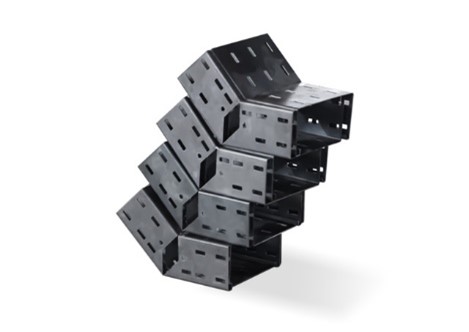
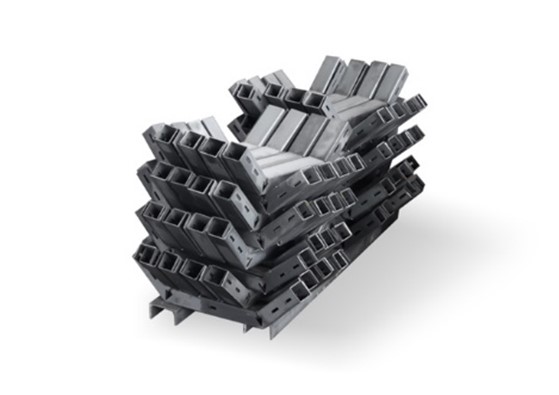
The design and production of cable tray connections is based on the bending radius of the cable. In the normal and standard mode for the production of fittings is usually with a radius of 300 mm, but for this company, it is possible to supply fittings with any radius.
All the connections are produced in two ways:
1- welded connections
2- screw connections
The welding method is used to produce steel joints, while GRP joints are typically formed using bolts and nuts.
Cable ladders technical specification:
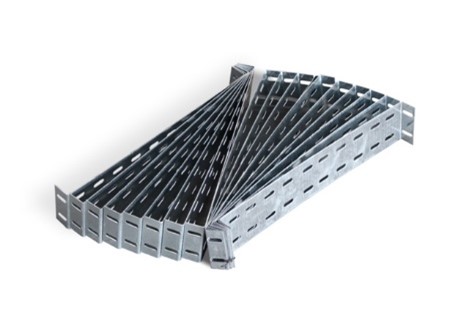
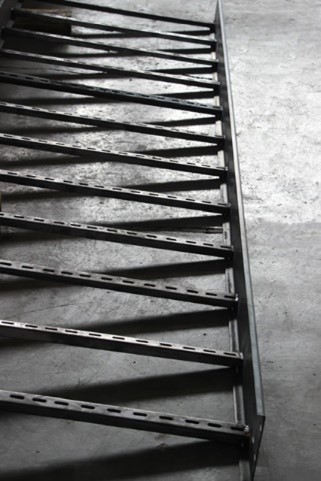
The production range of cable ladder is from 50 mm to 600 mm wide. The height of the cable ladder wall depends on the type and size and number of cables that are placed in it. For cable ladders with a width of 50 to 100 mm, the wall height is considered to be less than 100 mm, and for cable ladders with a width of more than 100 mm, the wall height is considered to be 100 mm. Of course, it is important to note that Britiston company is able to produce cable ladders with other specifications according to the client’s needs. Usually, cable ladders are produced in lengths of 2 and 3 meters, and a part called Hold Down Clamp is used to install the cable ladder on the support.
Cable ladder joints:
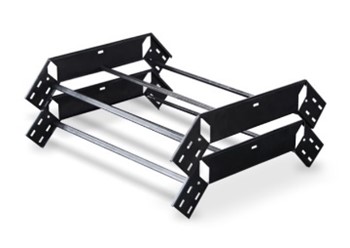
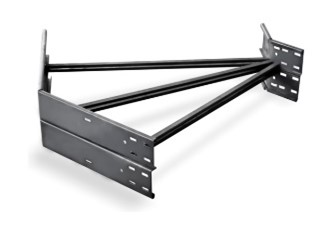
The design and production of cable ladder connections is based on the bending radius of the cable. In the normal and standard mode for the production of fittings is usually with a radius of 300 mm, but for this company, it is possible to supply fittings with any radius.
All the connections are produced in two ways:
1- welded connections
2- screw connections
The welding method is used to produce steel joints, while GRP joints are typically formed using bolts and nuts.
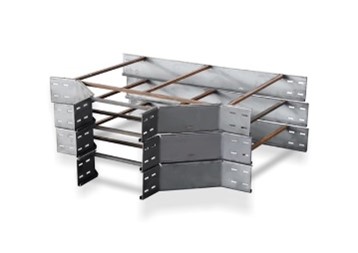
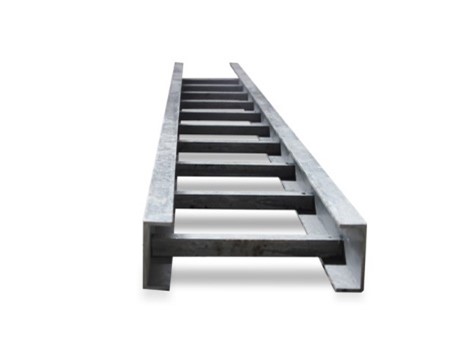
The difference between cable trays and cable ladders:
The difference between cable tray and cable ladder is the amount of air flow. In the cable ladder, the air flow is very high and causes the cable to cool down. For this purpose, the cable ladder is usually used in the electrical part, and the cable tray is used for the cables of precision instruments.