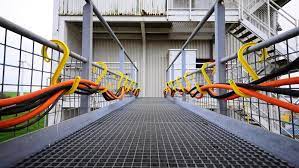
Thousands of workers are injured every year from slips, trips and falls, many of which are caused by trailing cables. They are the most common cause of injury at work and are also the most reported injury to members of the public. Fortunately, the solutions to preventing these types of hazards are simple and often low cost. Options to prevent this from happening include insulating cables, installing cables into separating cable or conduit systems, or installing cables in trays with partitions that provide separation.
What is the cable management system?
Cable Management System provides completely integrated rigid support for electrical cables, such as high voltage lines, power distribution cables, control wiring, varied telecommunication cables, electrical continuity, continuous support, positive radius control, protection against physical damage, ease of installation, engineered performance etc. Without a system, your cables can quickly become entangled, damaged, or worse, can cause accidents. It is a safe, versatile and cost-effective way to carry large numbers of wires over considerable distances between their points of origin and termination. It provides shelter from sunlight and accumulation of dirt. They not only guard against damage to and accidental contact with cables but also help to isolate cables from fire and radio frequency interference by using suitable materials. Therefore, the proper management of cables is integral in ensuring that your workspace not only stays tidy and efficient, but also safe for those working in it. The cable management systems you should consider depend on the types of cables you are working with, installation factors and the environment they are being used in. There is a huge selection of products available, most of which are low cost, multi-purpose and also reusable. Below we’ll give some features of cable management systems in the construction industry:
Mechanical strength
Often one of the most basic and ultimately important considerations is ensuring the cable management system can withstand the level of wear it will likely be exposed to. Cable Management System, due to where it is mounted within the room, may receive accidental heavy impacts, especially in busy environments. In this situation, the selection of material with high resistance is of particular importance.
Compliance
To ensure the quality and performance of the product, any Cable Management System should be manufactured in line with IEC61537 standard for steel, NEMA FG1-1993 for GRP cable tray and DIN EN 13706-2 for GRP profile.
Cable protection
For some applications, there may be a need to protect the cables from radiated electromagnetic interference (EMI). As the source of this interference can be both nearby equipment and other cables routed alongside, there are different solutions that may be suitable.
Customization
A further key consideration when choosing cable management systems is the environment that the products will be fitted in. Levels of moisture, humidity and temperature as well as exposure to chemicals must all be considered. selecting options for tailored solutions based on project requirements.
Fire performance
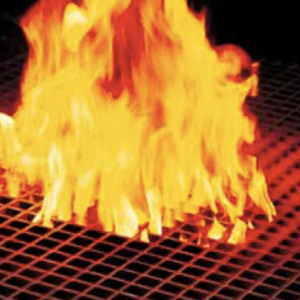
A factor that has gained increased importance in recent years is the issue of fire performance. GRP as a material is resistant to ignition and is self-extinguishing so it does not contribute to the spread of fire. Similarly, aluminum and steel are all classified as low smoke zero halogen (LS0H) materials. In addition, the newest Edition of the Wiring Regulations also includes enhanced regulations around fire safety. In the event of a fire, falling and fallen cables can present a serious hazard to those evacuating as well as firefighters moving into and through the building.
Easy installation
Sometime the requirements of the building can be met while improving the speed or simplicity of installation. This is often important where project timeframes are under pressure or if installation has to be completed with minimal disruption to occupants.